The following is the opinion of the author.
In the event of an industrial accident explosion at the enterprises of the chemical, petrochemical complex, gas and oil refineries, the following sequence of selection of the barrier class can be recommended.
1. Learn the TNT equivalent of a substance (which can react) and the distance to the barrier (doors, windows, hatch, gateway). For example: 1000 kg of TNT equivalent at a distance of 60 meters.
2. In Appendix No. 3 to the Federal norms and rules in the field of industrial safety "General rules of explosion safety for fire-hazardous chemical, petrochemical and oil refining industries" for explosion-hazardous chemical, petrochemical and oil refining industries" - "Calculation of the mass of the substance and radii of destruction zones involved in the explosion" describes one of the methods for calculating the affected areas based on the "TNT equivalent" of the explosion of the TNS.
Table 2 provides a classification of fracture zones depending on the values of excess pressures on the shock wave front and the dimensionless coefficient K.
Class of destruction zone | K | Δ P, kPa | Probable consequences, nature of damage to buildings and structures |
1 | 3,8 | >= 100 | Complete destruction of buildings with massive walls |
2 | 5,6 | 70 | Destruction of walls of brick buildings 1.5 bricks thick; movement of cylindrical tanks; destruction of pipeline overpasses |
3 | 9,6 | 28 | Destruction of ceilings of industrial buildings; destruction of industrial steel load-bearing structures; deformation of pipeline overpasses |
4 | 28 | 14 | Destruction of partitions and roofs of buildings; damage to steel structures of frames, farms |
5 | 56 | <= 2 | Boundary area of damage to buildings; partial damage to glazing |
The radius of the destruction zone is determined by the formula 4:
For example, the TNT equivalent of the substance is WT = 1000 kg, the distance to the barrier is R = 60 meters.
We use the formula to calculate the dimensionless coefficient K, which characterizes the class of the resolution zone in which the barrier is located:
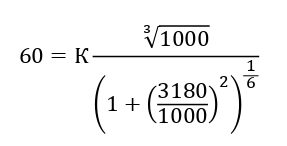
The dimensionless coefficient of Creal = 8.9.
3. Apply the same formula to the barriers tested in class VZ 28 - 500 kg in 46 meters,
and VZ 50 - 500 kg in 30 meters.
The same information can be gleaned from certificates and test reports of selected obstacles, paying attention to the TNT equivalent of the charge, which tested the barrier and the distance from the epicenter of the charge to the barrier.
For VZ 28:
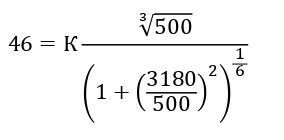
CHF 28 = 10.7
For VZ 50:
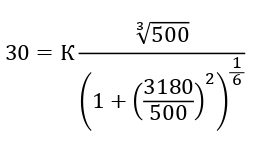
CHF 50=7.1
4. The less K, the higher the load, so the barrier of class VZ 50 is suitable (KVZ 50 < Creal).
Barrier class VZ 28 - not recommended for use (KVZ 28> CREAL).
5. According to the author, who participated in several dozen explosive tests, such a method is suitable if the TNT equivalent of the charge that the barrier was tested is 100 kg or more (at least, with many reservations - 50 kg).
We will help you choose and calculate the protection – the consultation is free.